← WorkRaptor

Trust and security UI where a user error is unrecoverable

Role
Product and visual design
Period
2023
Owned
Self-directed — interface, visual system, prototyping, launch art
Outcome
At the point of commitment, one control and nothing else.

Almost every interface convention we have assumes a way back. Undo, drafts, a support queue, a chargeback — the reason it is acceptable to make an interface merely good is that being wrong is survivable. Raptor is a self-directed study in what happens to those conventions when it is not: send to the wrong address and the money is gone, with nobody to appeal to. Legibility and restraint stop being taste at that point and start being the safety mechanism, because there is no confirmation email and no reversal behind them.
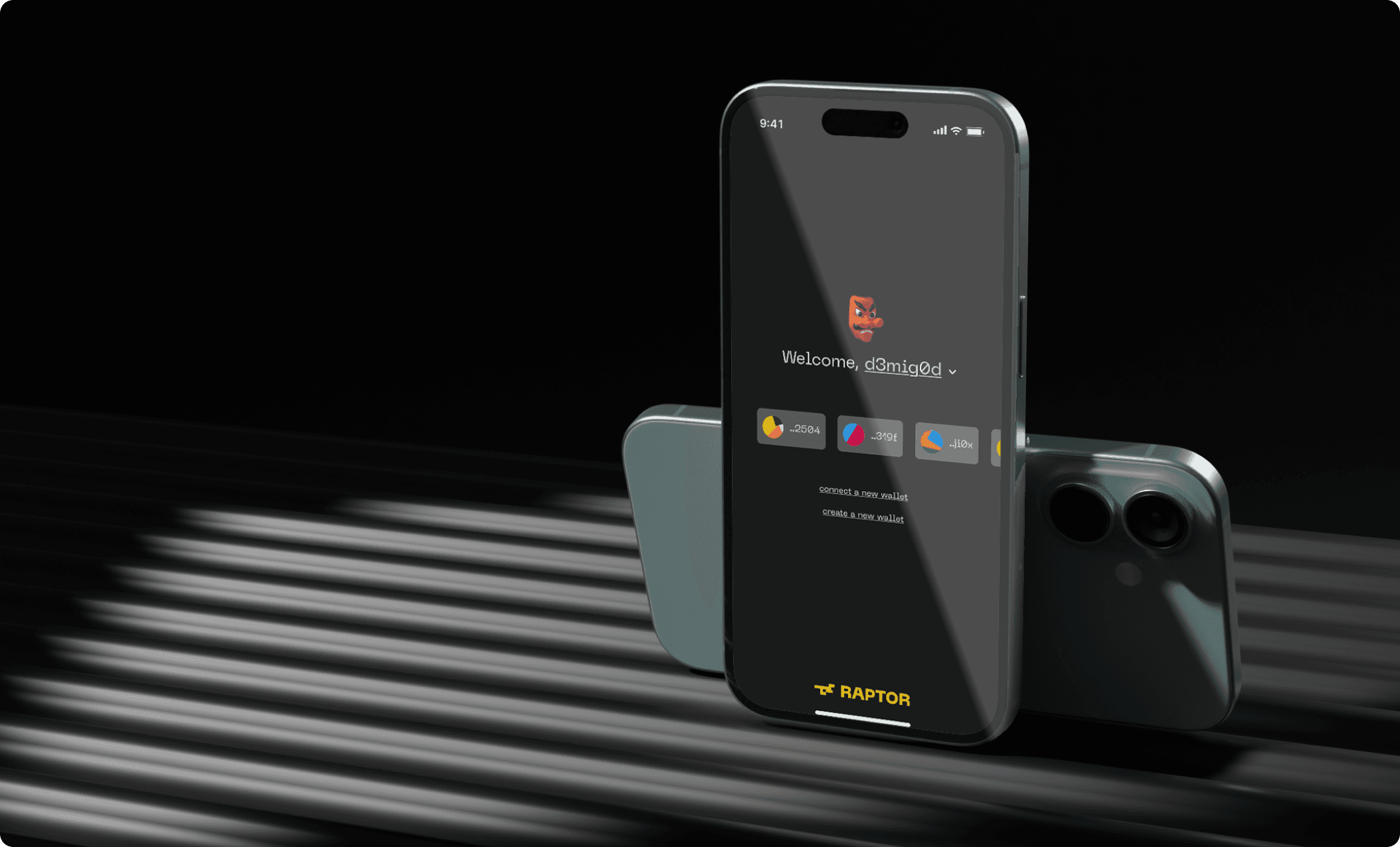
The Raptor welcome screen on a phone, showing account selection and options to connect or create
The first screen sets the terms. One identity, the accounts beneath it, and two quiet routes out — nothing here is trying to be exciting, because the product it opens is one where excitement is a warning sign.

It also rules out the obvious answer. The standard response to risk is more confirmation, and past a point that makes things worse — people learn the shape of a warning and click through it without reading. So the safety had to come from the layout instead: one signal colour held back for the moment of commitment and kept off every decoration, numbers in fixed tabular columns so a value never moves as it updates, and a commitment screen carrying the amount, what it converts to, and the single control that does it.
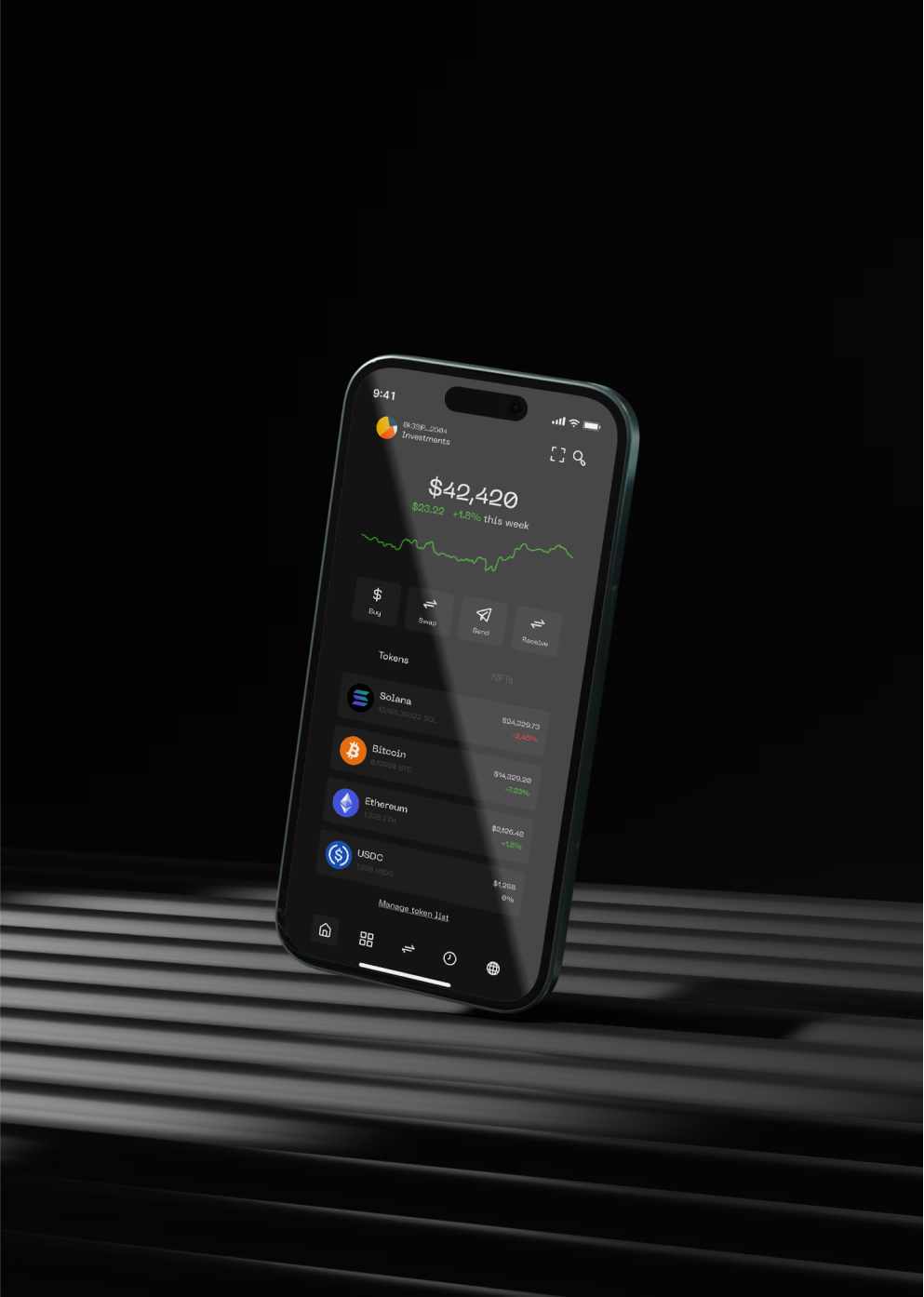
The portfolio screen: total balance, a sparkline, four actions, then holdings
Total first, movement second, actions third, holdings last — the order someone actually asks the questions in, rather than the order the data arrives in.
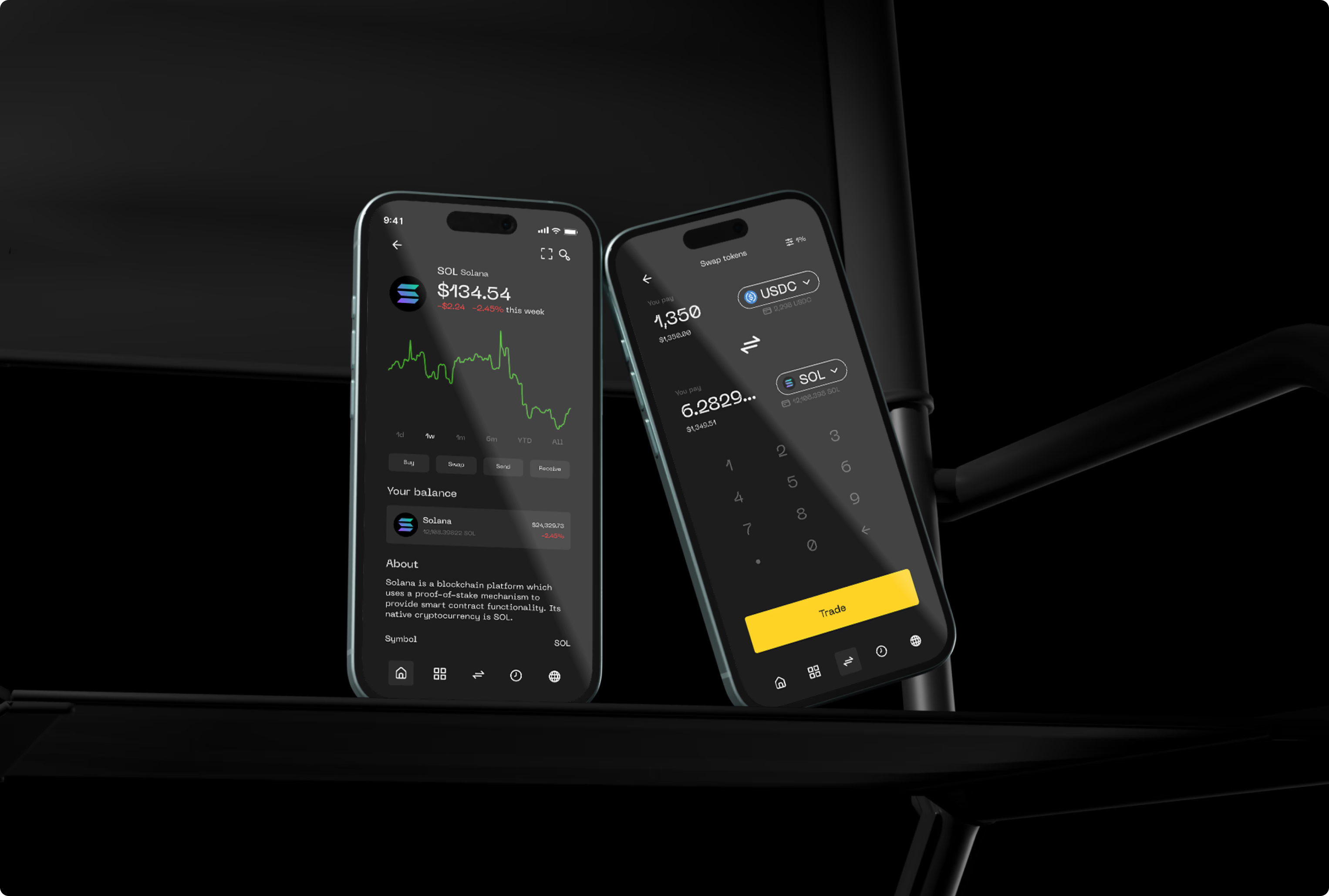
An asset detail screen beside the swap screen with its numeric keypad and single trade button
The commitment screen carries one control. Everything that could compete with it — navigation, secondary actions, anything decorative — is gone by the time the amount is being entered.
A Raptor billboard mounted above shopfronts on a London street
The same restraint outdoors, which is the harder test: one screenshot, the mark, and the stores. A category that advertises with slogans is a category where showing the product reads as confidence.