A new mountain every day
I like mobile games, but I’m tired of the ads. I like daily games too, but most of them get to “that was ok” and stop. There’s a design renaissance happening in games right now, and I wanted to see how far a daily game could go. I also really missed Downhill Domination and SSX Tricky, and the feeling of throwing yourself down a mountain.
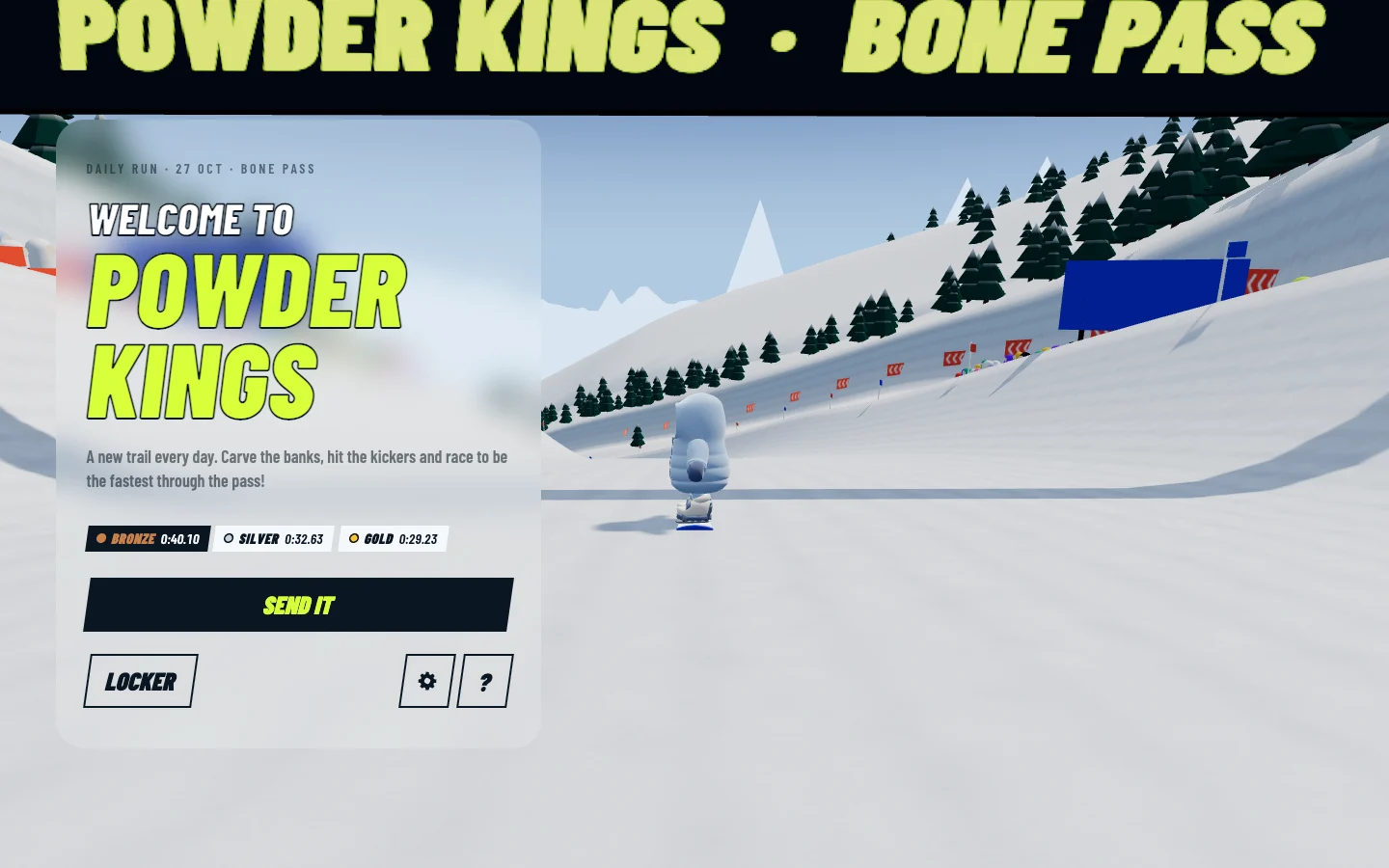
So that’s Powder Kings. There’s one new mountain a day, the same for everyone, with big airs, ghost races and a fresh leaderboard. It’s free and runs in your browser, on your phone or computer, with no ads and no sign-up.
Getting the feel right
The first version took three hours, and on paper it had everything: daily courses, shortcuts and hairpins. It also had no soul. AI can make the thing, but it can’t feel it. That part is your job.
So I broke the game down element by element: the camera, the speed, the landings, the rider. Anything you have to judge by feel got a slider, so I could set it while playing.
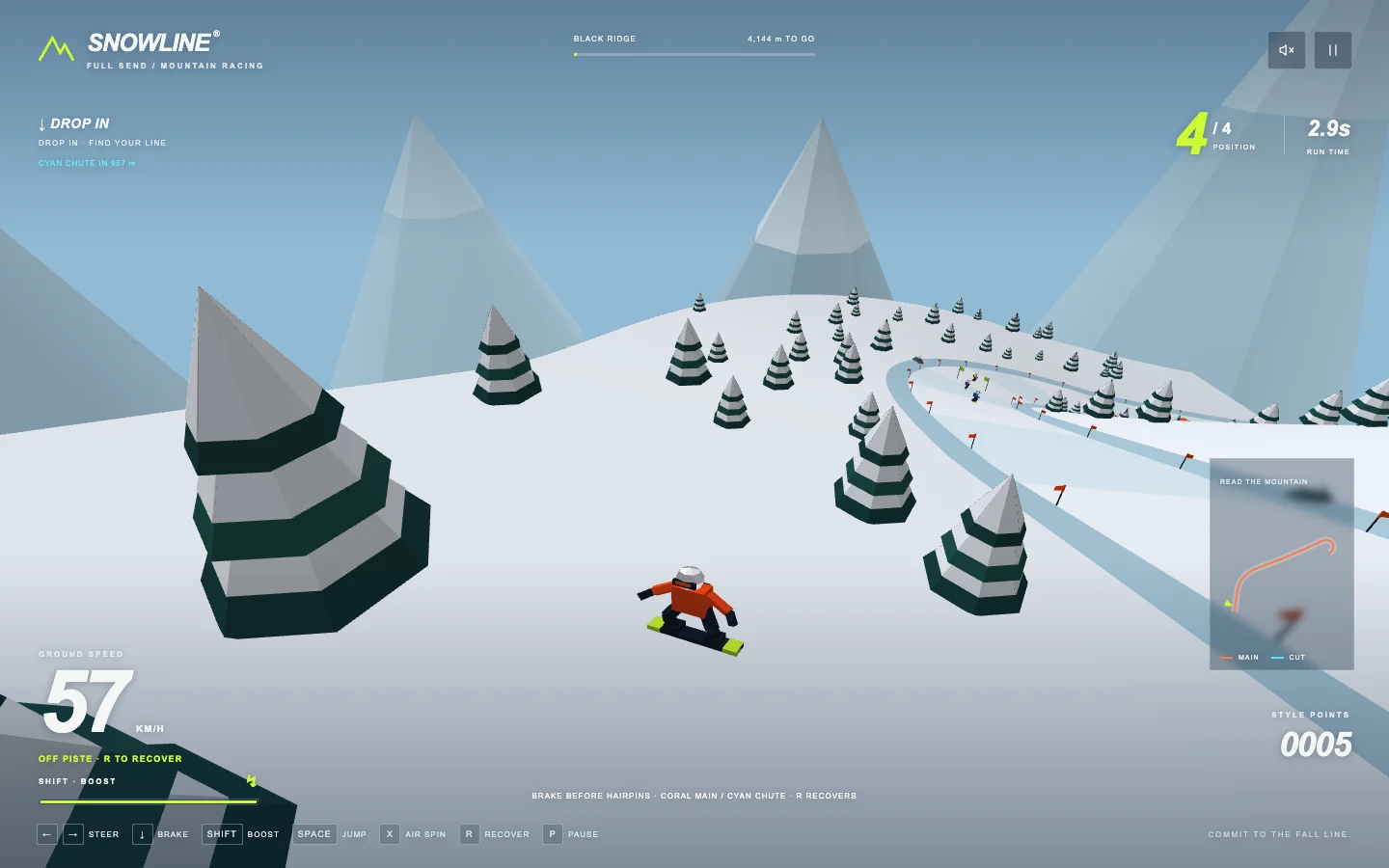
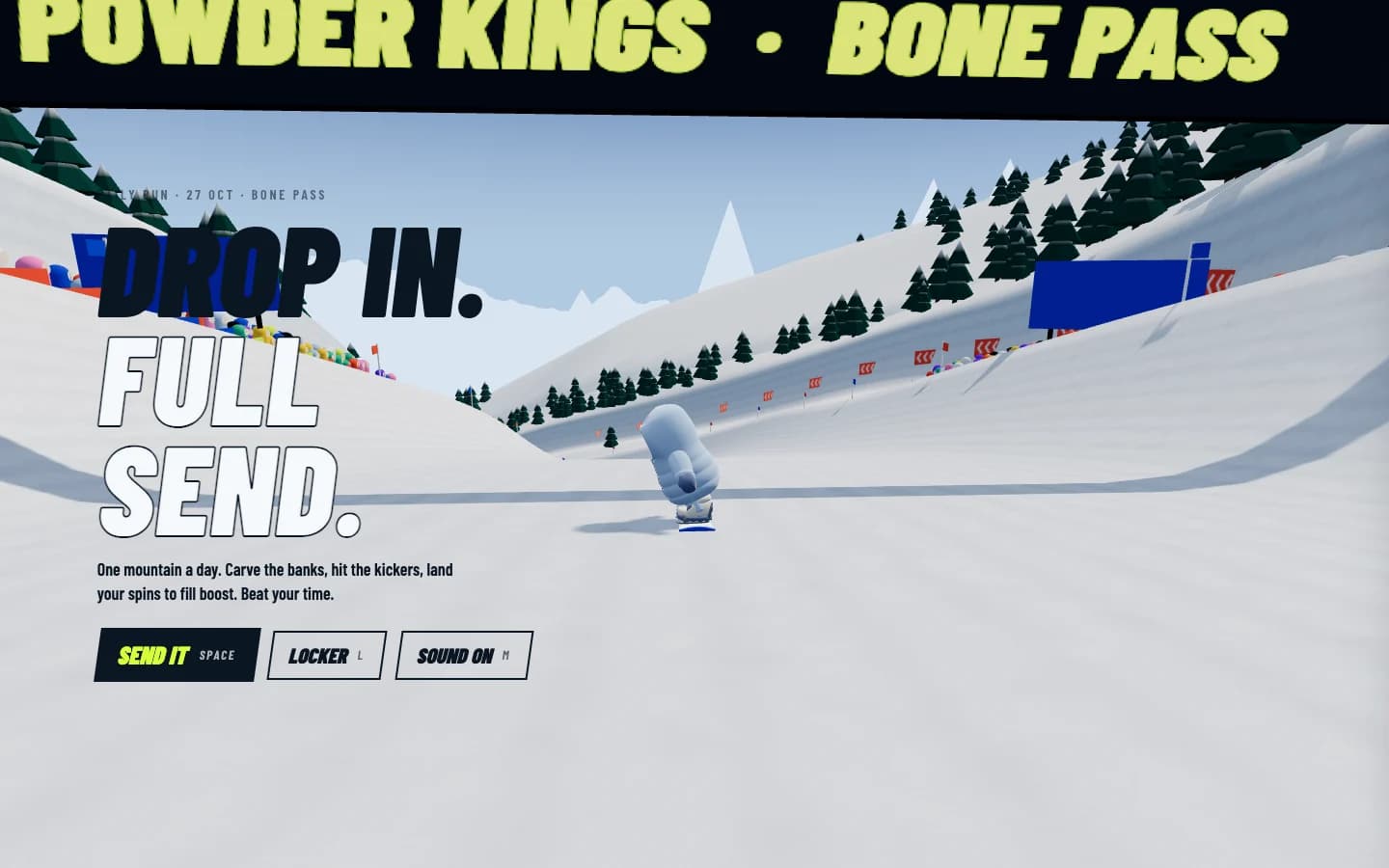
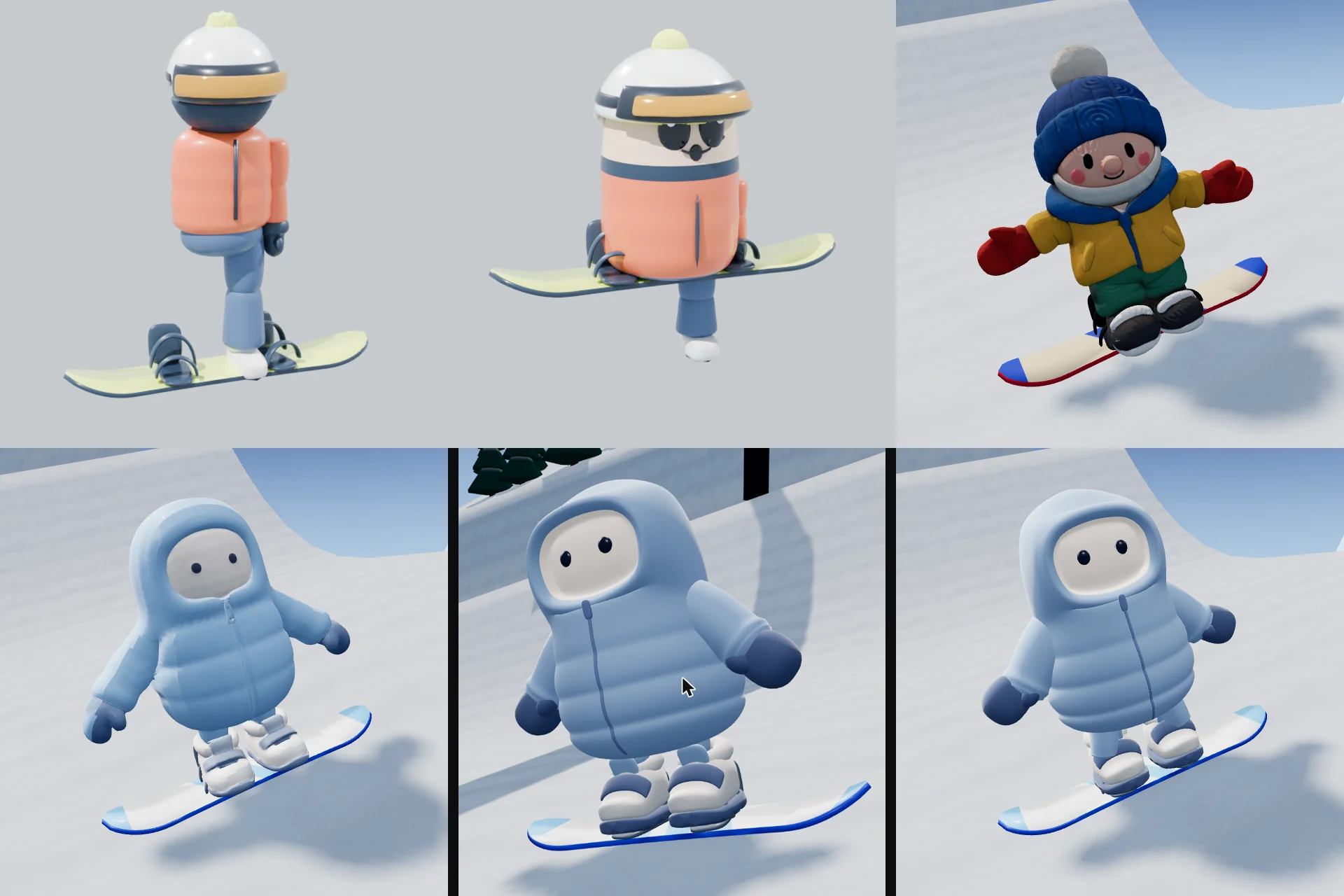
The rider is where it really clicked. I went through six in a day, generating loose concepts to react to, then building the final one in Blender and checking it against the concept from every side. Once the bean turned up, everything else started to fall into place.
Everything around the game
What I’m proudest of is how quickly it’s filled out. Two weeks in, it has ghost racing, daily weather, a rider you can customise, accounts with time alerts, a full soundtrack and an announcer. That’s a lot for one person, and it’s the part that shows what this way of working can do.
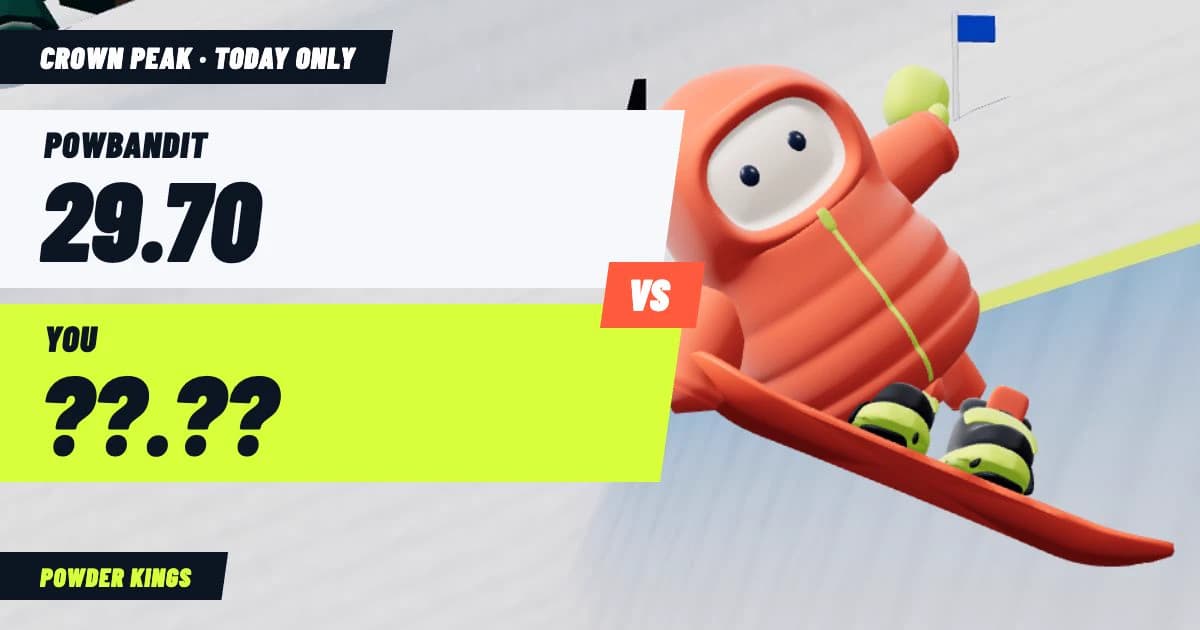
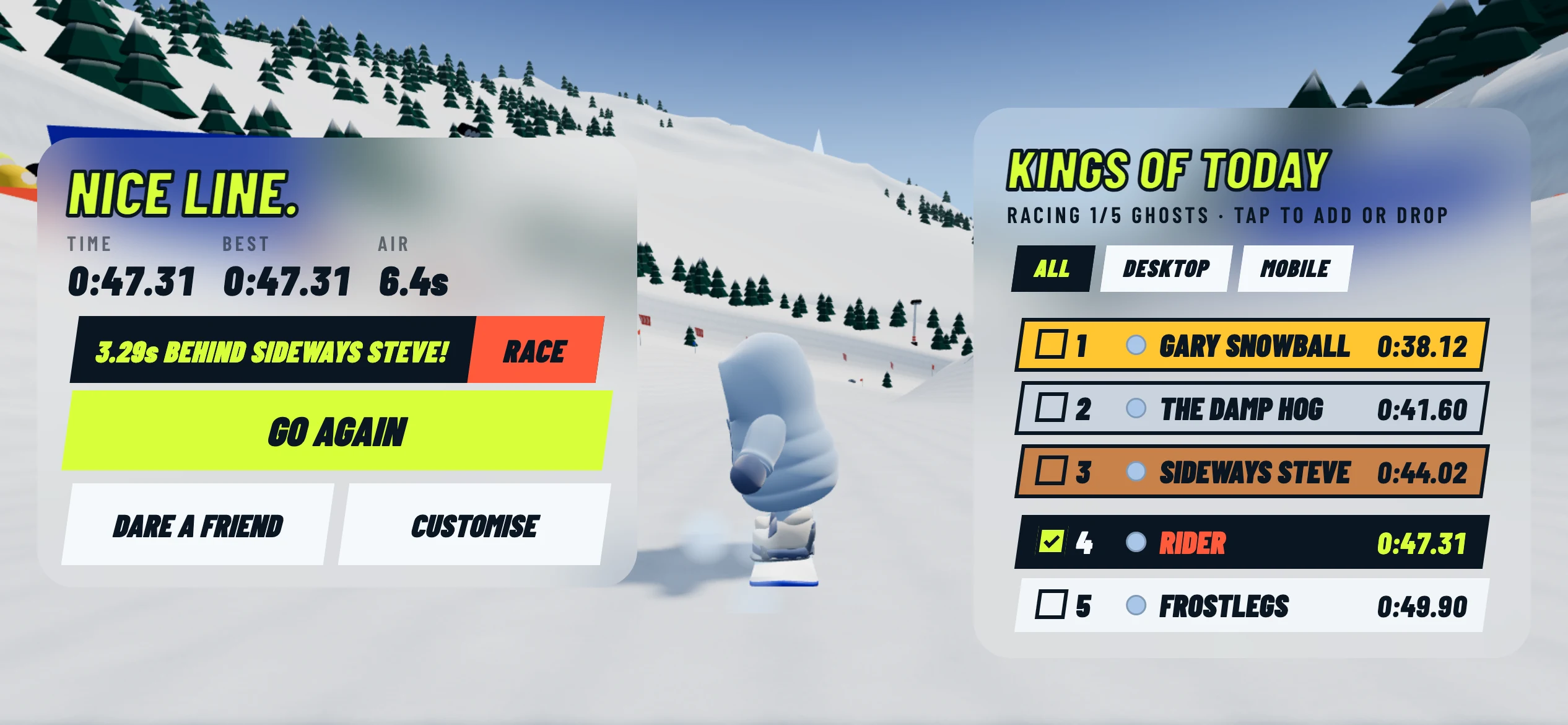
My favourite piece is the dare. Tap DARE A FRIEND and the game draws a card from your run, with your rider in your colours, mid-grab, and your time against a blank. Your friend gets that image in the chat, and the link puts them one tap from racing your ghost.
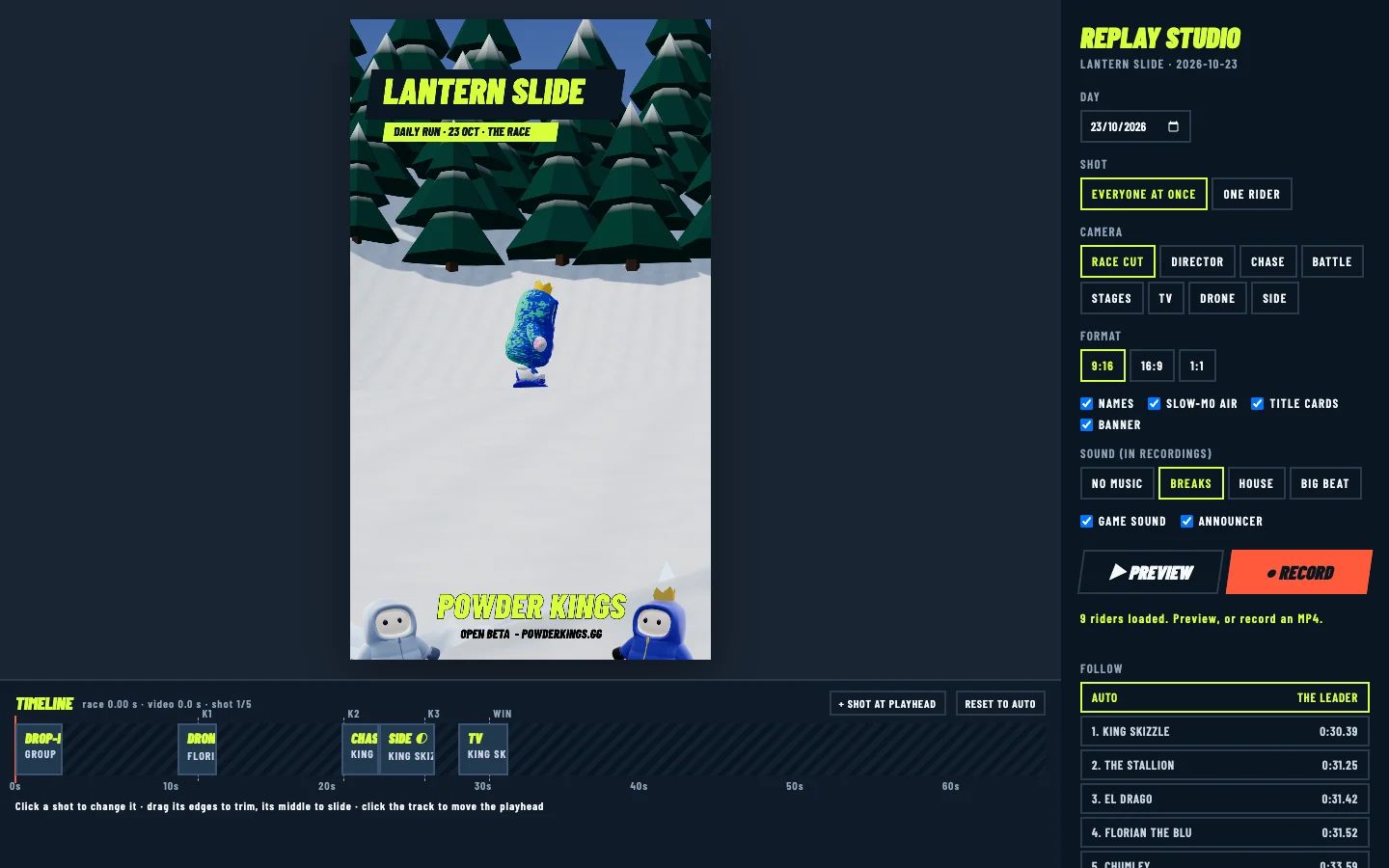
Then there’s the replay studio, which is complete overkill and which I love. Every run is saved as data for ghost racing, so the same run can be filmed again with any camera. The studio cuts a race automatically, mixes the sound and exports a video ready for socials, and I can trim every shot on a timeline. The game films itself.
Watching people play
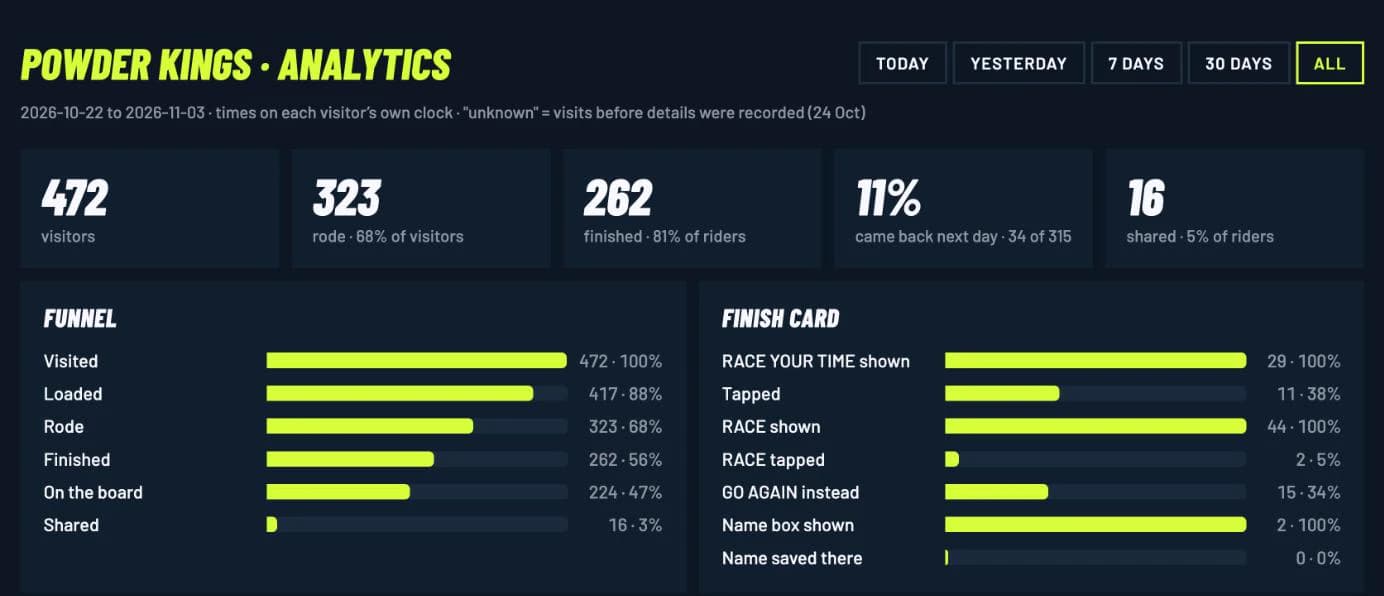
I put it on Reddit, and strangers started turning up from all over. One has made over 500 attempts. The feedback has been lovely, but people being nice doesn’t tell you what to fix, so I built analytics to see what they actually do.
That changed real decisions. Crashes looked like the obvious reason people might leave, and the data mostly said otherwise, except on a very first run. Most riders who went again got faster, so the finish screen now puts your next run one tap away, against your own ghost or the rider just ahead of you.
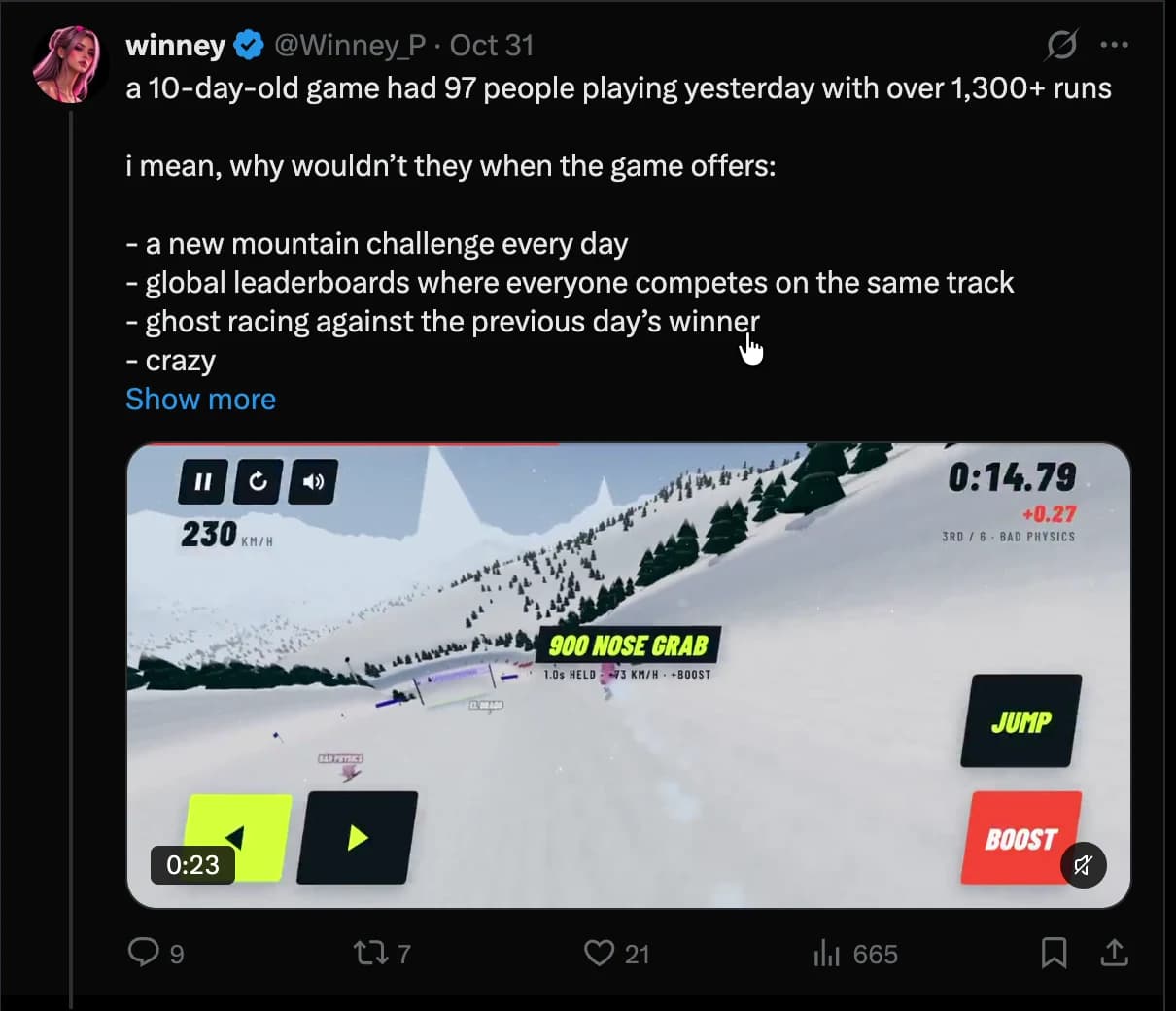
It’s also been great to see the game travel. Within ten days, accounts I’d never heard of were sharing it on X as a cool new game, using a clip of my own run.
How I work now
I think of AI as a Library of Babel. All the content is in there, and someone has to arrange it. I used to do that by hand in Figma, Adobe and Blender. Now I can curate much faster, using AI to execute my taste and fill in the blanks like accounts, security and profanity filters.
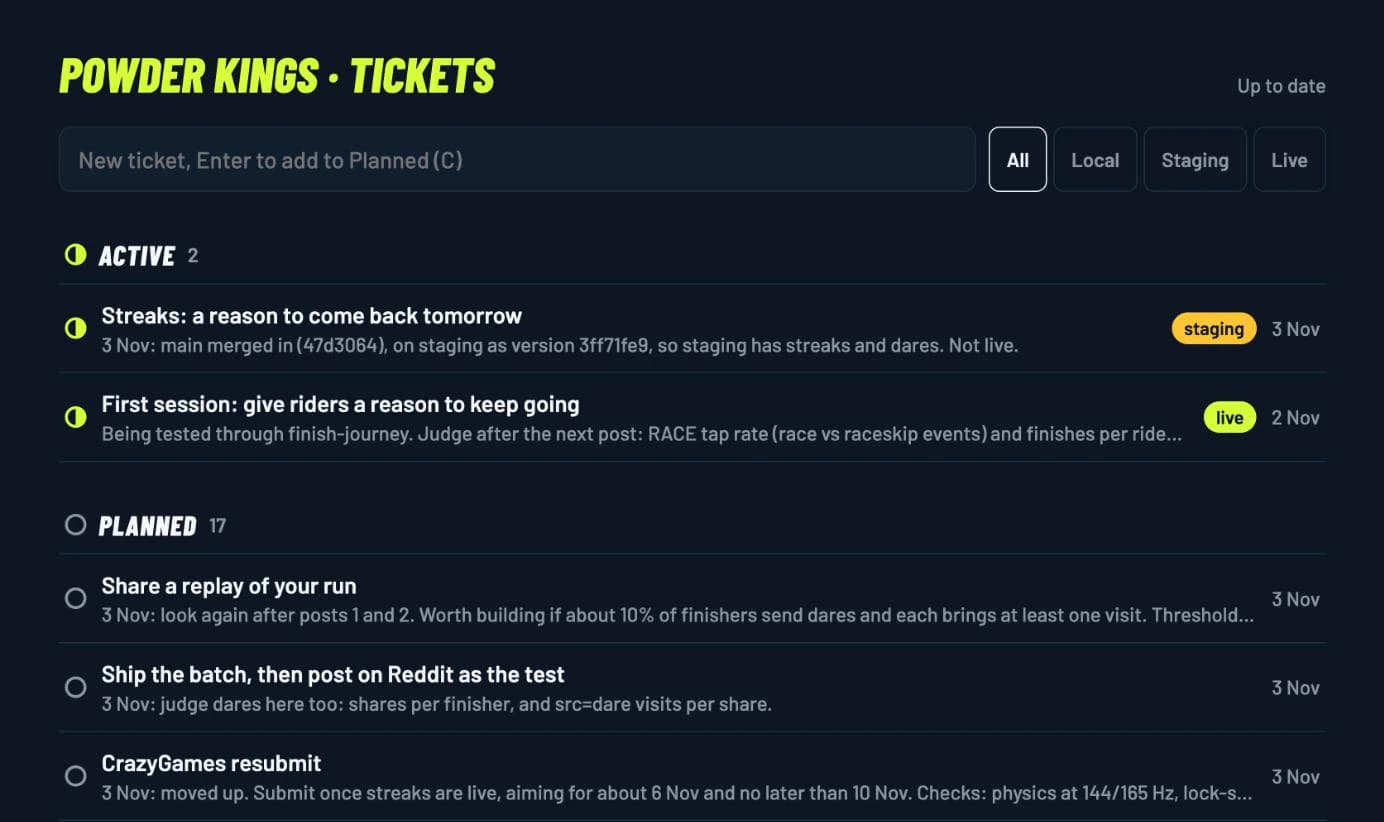
It can be a monkey’s paw, because it gives you exactly what you asked for. That’s why it takes a designer to get something good out of it. I still design in Figma, and I keep every piece of work on a board so I always know what’s live.
Before, I could design the product I imagined. Now I can deliver it. You get the whole pipeline from one person, with a designer’s taste and craft all the way through.
Where it goes next
Next up are streaks, and more reasons to come back tomorrow. After that, more games, for myself and for clients.
If you’ve got something ambitious you want to feel this good, my email’s below. Today’s mountain is open in the meantime.